
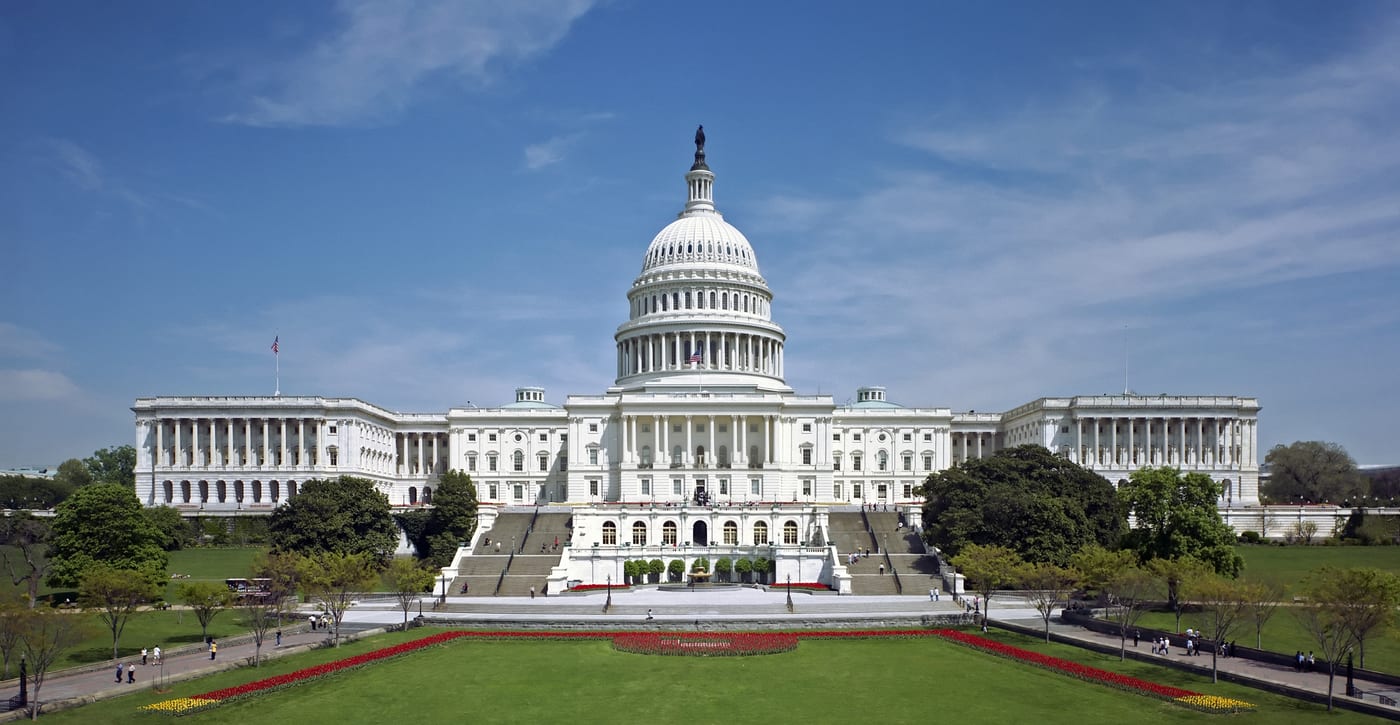
Library of Congress (Carol M. Highsmith). The White House panoramic. Public domain via Wikimedia Commons.
Trump signed psychedelics into the executive priority list
Lede
On Saturday 18 April 2026, President Trump signed an executive order in the Oval Office directing the Food and Drug Administration to accelerate the review of psychedelic treatments for serious mental illness. The order committed at least fifty million dollars in federal funds to research on ibogaine, the African iboga-derived hallucinogen. It directed the FDA Commissioner to issue Commissioner’s National Priority Vouchers to psychedelic drugs holding Breakthrough Therapy designations for serious mental illness. It required the Department of Health and Human Services, the FDA, and the Department of Veterans Affairs to collaborate with the private sector to increase clinical-trial participation and evidence generation. Trump framed the order around veteran suicide. “Since 9/11,” he said, “we have lost over 21 times more veteran lives to suicide than on the battlefield.”
The signing closed a regulatory arc that had begun twenty months earlier in the opposite direction. In August 2024 the FDA had rejected Lykos Therapeutics’ MDMA-PTSD application. By April 2026, the same FDA, under the same administration, was being directed to accelerate the same category. The leontia analysis of Apeiron Investment Group’s role as the structural protagonist of the renaissance and the operational state-level layer in Oregon and Colorado sit alongside this piece. This article focuses on what the executive order does, and what its mechanisms imply for the post-2024 regulatory pathway.

What the order does
The text of the 18 April executive order operates on three distinct mechanisms.
The first is direct federal funding. The order commits a minimum of fifty million dollars in federal funds to ibogaine research, routed through the Department of Veterans Affairs and the National Institutes of Health. Ibogaine is the African Tabernanthe iboga shrub’s primary psychoactive alkaloid, used historically in Bwiti spiritual practice in Gabon and extensively studied in the 2010s and 2020s for opioid use disorder and treatment-resistant depression. Federal research funding for ibogaine at this scale is unprecedented. The substance had been Schedule I in the US since 1970.
The second is the Commissioner’s National Priority Voucher mechanism. The order directs the FDA Commissioner to provide Commissioner’s National Priority Vouchers, the new accelerated-review currency introduced under the second Trump administration, to psychedelic drugs that have already received Breakthrough Therapy designation. The voucher reduces the FDA review timeline from the standard ten months for NDA review to a target of one to three months. The voucher mechanism does not lower the substantive evidence bar. It compresses the calendar.
The third is the inter-agency coordination mandate. HHS, the FDA, and the Department of Veterans Affairs are required to collaborate with the private sector on clinical-trial participation and evidence generation. The VA is the largest single mental-health-services payer in the United States. The order positions the VA as a structural enabler of psychedelic-therapy trial enrollment, which addresses one of the persistent operational constraints on US psychedelic Phase 3 work since 2018.
The veteran framing is the political vehicle. The substantive policy is the accelerated commercial pathway for the Breakthrough-designated psychedelic biotech pipeline.
Which drugs benefit
Two synthetic psychedelics currently hold FDA Breakthrough Therapy designations for serious mental illness and are therefore directly inside the executive order’s beneficiary set.
The first is Compass Pathways’ COMP360 psilocybin for treatment-resistant depression, Breakthrough Therapy designation 2018. Compass reported positive results from the first of its two Phase 3 trials (COMP005) in 2025 and from the second (COMP006) in February 2026. COMP006 hit its primary endpoint with high statistical significance (P less than 0.001) and a 3.8-point MADRS reduction between the 25 mg and 1 mg arms. Trade analysts at Psychedelic Alpha noted that the magnitude was modest. Compass has announced plans to submit an NDA in the fourth quarter of 2026. The Commissioner’s National Priority Voucher mechanism would compress the FDA review from the standard ten months to as little as one to three months. If both elements hold, COMP360 could reach commercial availability in the first half of 2027.
The second is AtaiBeckley’s BPL-003, an intranasal formulation of mebufotenin (5-MeO-DMT), Breakthrough Therapy designation October 2025. BPL-003 produced positive Phase 2b results in July 2025 in a 193-patient trial across 38 sites and six countries. Phase 3 is expected to start in the second quarter of 2026. If the BPL-003 Phase 3 reads out positively in 2027 to 2028 and the Commissioner’s National Priority Voucher applies, BPL-003 could follow COMP360 to market within twelve to eighteen months of the psilocybin approval.
The executive order does not create new clinical-evidence requirements. It compresses the review of evidence that the Breakthrough-designated biotechs have already generated or are in the process of generating.

Why the FDA reversed direction
The 18 April 2026 executive order is the procedural reversal of the structural narrative that had defined the psychedelic-biotech sector since August 2024.
In August 2024 the FDA had issued a Complete Response Letter to Lykos Therapeutics, the commercial vehicle for the MAPS-developed MDMA-PTSD therapy, declining to approve the application. The agency cited safety reporting, trial durability, blinding failures (nearly every MDMA-arm patient correctly identified themselves as in the MDMA arm), and the inseparable role of psychotherapy from MDMA in the protocol. The agency required an additional Phase 3 trial. MAPS reduced its staff by approximately 33 percent. The narrative through late 2024 was institutional setback.
The structural setback was not regulatory hostility to psychedelics as a category. It was an evidence-quality and trial-design rejection of a specific application from a specific sponsor. The Compass Pathways and AtaiBeckley pipelines operate on different evidence bases. The Compass synthetic psilocybin trials were blinded (with the limitations noted in the 25 mg versus 1 mg arms). The AtaiBeckley BPL-003 Phase 2b enrolled 193 patients across six countries. Both pipelines met the FDA’s Breakthrough Therapy designation thresholds before the Lykos rejection and continued to operate normally during it.
The Trump executive order is structurally consistent with the FDA’s existing Breakthrough Therapy framework. It does not relax evidence standards. It accelerates the review of evidence the FDA has already accepted as breakthrough-quality. The order reads, in regulatory terms, as the agency-and-administration alignment on the post-Lykos pipeline, not as a reversal of the Lykos decision.

The veteran framing
The political framing of the order around veteran suicide is operationally significant for one reason. The Department of Veterans Affairs is the largest single mental-health-services payer in the United States. The VA’s annual mental-health spend runs in the high single billions of dollars. The order’s direction to HHS, FDA, and the VA to coordinate on trial enrollment and evidence generation gives the post-2024 psychedelic-biotech pipeline access to the largest US clinical-trial recruitment pool with the lowest cost of acquisition.
The veteran-PTSD market is the most institutionally documented post-traumatic stress disorder population in the world. Roughly 21 percent of post-9/11 US combat veterans meet PTSD diagnostic criteria. Suicide rates among post-9/11 veterans run 50 to 60 percent higher than age-matched civilian rates. Trump’s framing (“21 times more veteran lives to suicide than on the battlefield”) is consistent with the broader documented data, though the specific multiple is debated. The political consensus on veteran-PTSD intervention is among the most stable in US health policy.
For Compass Pathways and AtaiBeckley, the VA-enabled trial-enrollment pathway is operationally valuable beyond the timeline acceleration that the Priority Voucher mechanism provides. The Lykos Phase 3 trial had taken roughly seven years to complete (2017 to 2023). Recruitment was the binding constraint. A VA-enabled Phase 3 trial could potentially complete enrollment in 18 to 24 months instead.
What to watch
Three developments will define the post-executive-order trajectory over the next twelve months.
The first is the Compass Pathways NDA submission in the fourth quarter of 2026. If the submission lands on schedule and the Commissioner’s National Priority Voucher applies, COMP360 psilocybin could be approved by mid-2027. That timing would place the first prescription classic psychedelic on the US market roughly nine years after the original Breakthrough Therapy designation. Approval would also trigger the first national-formulary debates among US insurers on psychedelic-assisted therapy pricing and reimbursement.
The second is the AtaiBeckley BPL-003 Phase 3 start in the second quarter of 2026. If the trial enrolls promptly with VA cooperation, BPL-003 could read out in 2027 to 2028. A positive readout would extend the prescription-psychedelic category beyond psilocybin to the 5-MeO-DMT family within the same regulatory cycle.
The third is the ibogaine research deployment from the 50 million dollar federal commitment. Ibogaine had been one of the most contested psychedelic substances regulatorily, with QT-interval cardiac safety concerns having stalled commercial development for two decades. Federal funding at this scale could resolve the safety questions and reset the commercial pathway. By June 2026, the Colorado Natural Medicine Advisory Board may extend the state-level programme to include ibogaine, which would create the first US state-level legal ibogaine framework, aligned with the federal research push.
For the reader who tracks UHNW asset allocation as a category, the 18 April 2026 executive order is the structural regulatory event the psychedelic-biotech sector had been waiting for since the 2024 Lykos drawdown. The biotech pipeline now has a regulatory pathway, a federal research budget, and a political framing that aligns with the most institutionally documented US PTSD population. The cycle that closes is the 2024 to 2026 institutional-recovery cycle. The cycle that opens is the commercial-launch cycle.
Sources cited
- The White House Fact Sheet, NPR, STAT, Time, and Military Times on the 18 April 2026 executive order. See 2026-04-18 Trump executive order psychedelics 50m ibogaine veterans.
- Compass Pathways IR and STAT on the February 2026 COMP006 second Phase 3 positive readout. See 2026-02 Compass Pathways COMP360 second Phase 3 positive readout.
- Compass Pathways IR and HCPLive on the 2025 COMP005 first Phase 3 positive readout. See 2025 Compass Pathways COMP360 first Phase 3 positive readout precursor.
- AtaiBeckley IR, BioSpace, and Fierce Biotech on the November 2025 strategic combination, BPL-003 Phase 2b results, and the Breakthrough Therapy designation. See 2025-11 atai Beckley Psytech merger completed AtaiBeckley.
- AJMC, Psychiatric Times, and Labiotech on the August 2024 Lykos FDA Complete Response Letter and the September 2025 public release of the CRL. See 2024-08 Lykos FDA rejection MDMA PTSD MAPS reorganization 33pc layoffs.

Sibling articles in the cluster
- Christian Angermayer’s three years, the protagonist-led companion piece on Apeiron and AtaiBeckley.
- The 95000 dollar psilocybin client, the operational state-level companion piece on Oregon and Colorado.