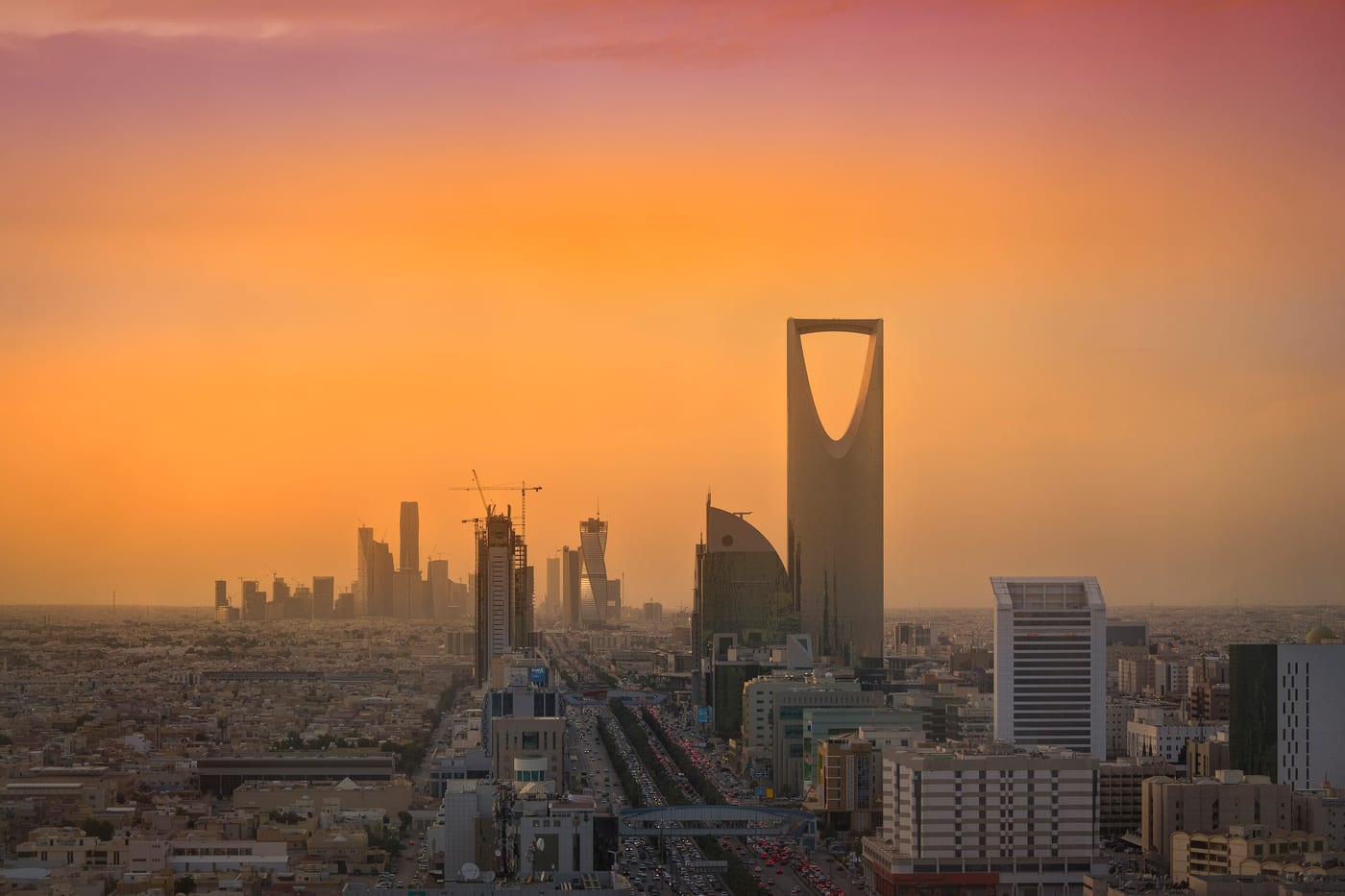
B.alotaby (3 April 2016). Riyadh Skyline showing the King Abdullah Financial District (KAFD) and the Kingdom Tower. CC BY-SA 4.0 via Wikimedia Commons.
PIF is walking away from its trophy decade
Lede
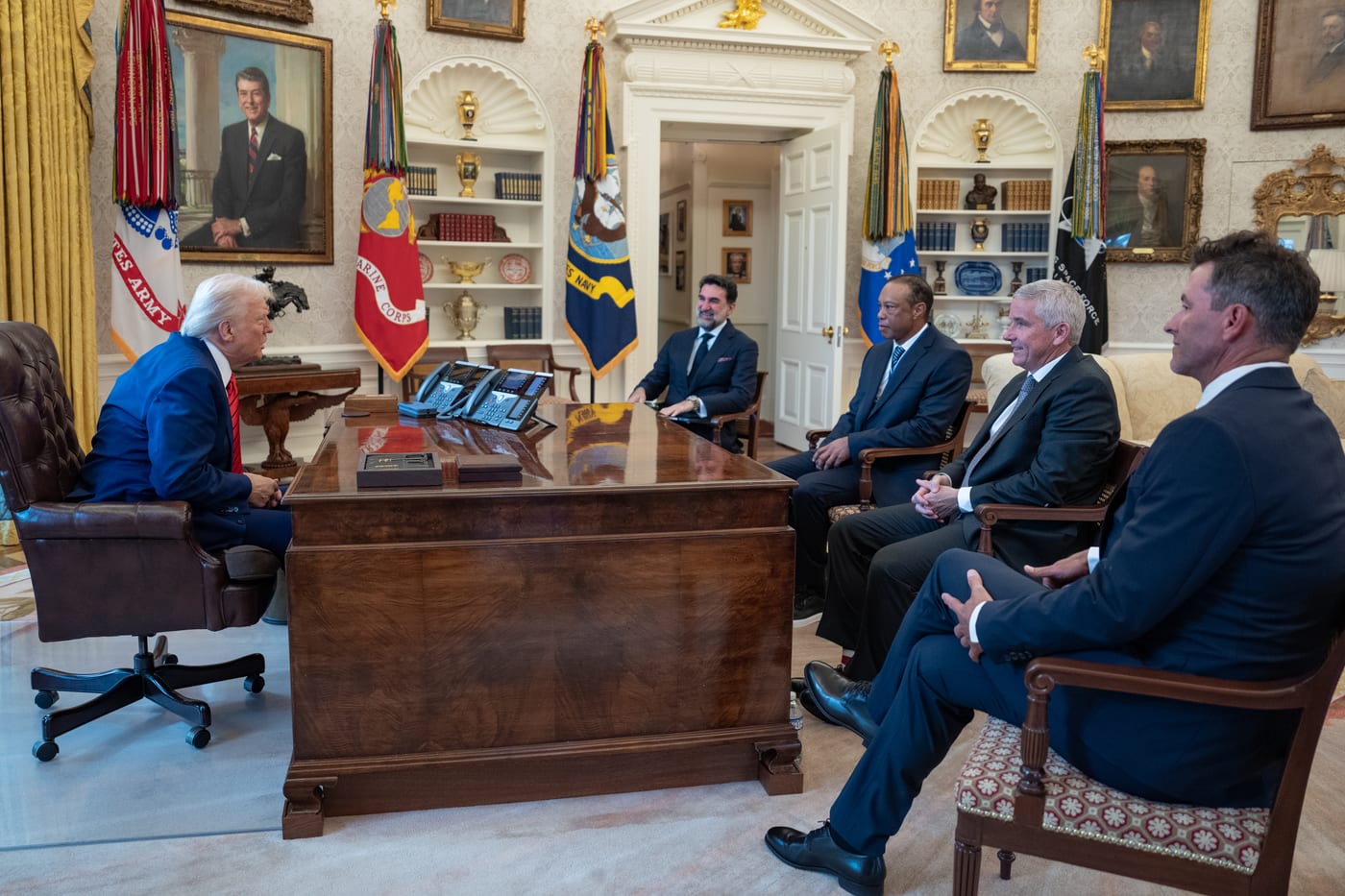
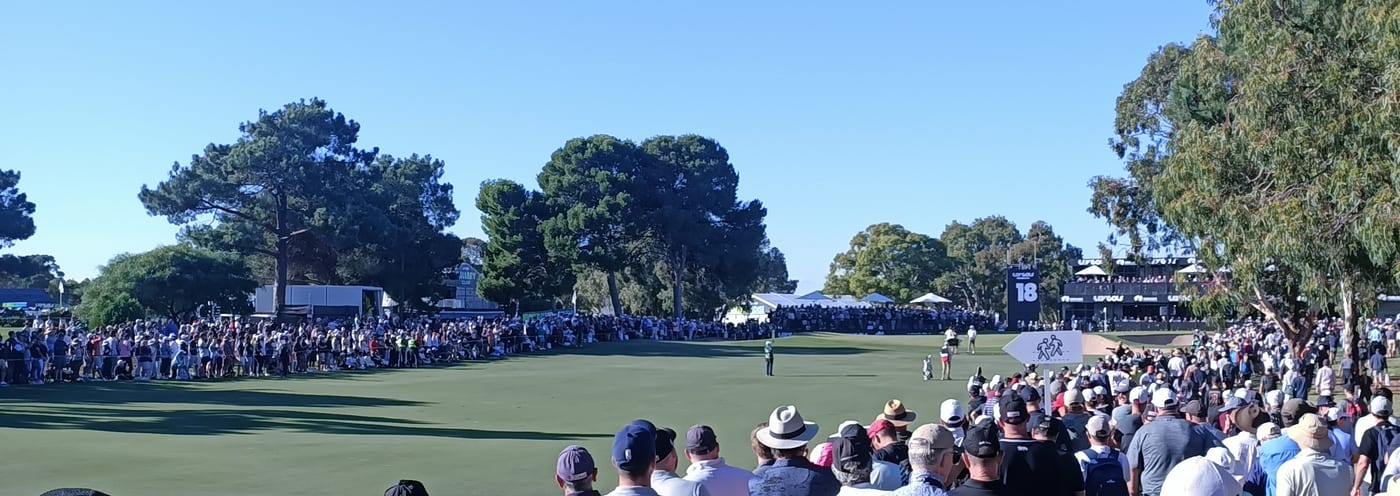
In April 2026 the Saudi Public Investment Fund informed LIV Golf that it would end the league’s funding at the close of the 2026 season. Five billion dollars had passed from the fund into the league since 2022. There had been a White House meeting in February 2025 attended by Yasir Al-Rumayyan, Tiger Woods, Adam Scott, and the President. There had been a June 2023 framework agreement with the PGA Tour that the financial press at the time called a merger. None of it had produced a merger. The PGA Tour took minority investment from a consortium of North American sports owners instead, explicitly choosing a non-Saudi capital partner. LIV Golf appointed a new chairman and began the search for funding that was not sovereign Saudi money.
Three months earlier, the same fund had quietly approved its 2026-2030 strategy. A fifteen-percent reduction in capital spending. A portfolio restructure into three formal tiers, Vision, Strategic, Financial. NEOM carved out as a standalone pillar to quarantine its eight-billion-dollar write-down. A new declared focus, in Al-Rumayyan’s words, on “AI infrastructure and investments in AI companies.” The fund that had spent the 2017-2024 decade as the world’s most aggressive sovereign buyer was, for the first time on the public record, telling the world what it had decided not to buy.
This is not the story of a sovereign fund in trouble. It is the story of a sovereign fund in discipline.
What changed in 2026
The decade-defining frame for the Saudi PIF was scale. Assets under management ran from approximately $230bn in 2017 to roughly $925bn at the end of 2024, with a $2tn target by 2030. In the same window the fund took 75 percent positions in the four largest Saudi football clubs, bought Newcastle United, financed LIV Golf into existence, took a leading shareholding in Aston Martin, built or began building NEOM, the Red Sea Project, Trojena, Sindalah, Diriyah, and Qiddiya, acquired Savvy Gaming Group’s portfolio (Scopely, ESL, FaceIt), launched the Roshn real-estate platform, and joined a consortium that paid $55bn, the largest all-cash leveraged buyout in history, to take Electronic Arts private in September 2025. That single September deal, $28.8bn of PIF capital alongside Silver Lake and Jared Kushner’s Affinity Partners, was responsible for roughly eighty percent of PIF’s $36.2bn of 2025 deployment. It is the deal that secured PIF the crown of the world’s most active sovereign-wealth fund for 2025 by transaction value.
The 2026-2030 strategy reads, on first inspection, as a continuation. Six declared ecosystems, travel/tourism/entertainment, urban development and livability, advanced manufacturing and innovation, industry and logistics, clean energy and renewables, and NEOM. Three portfolio tiers. The $2tn AUM target still on the books at headline level. But the detail tells the second story. NEOM’s standalone-pillar status was structurally unflattering, it functioned as a quarantine wall. Forty-one billion dollars had been cut from NEOM construction. The 2029 Asian Winter Games at Trojena had been postponed and moved to Almaty, Kazakhstan. Full NEOM completion had slid from 2030 to 2045. The Line, the megacity’s centrepiece, was being redesigned downward.
The retreat ran wider than NEOM. In April 2026 the Skift wires reported that Saudi Arabia had scrapped direct state funding for several Vision 2030 tourism programmes. The same month, PIF transferred seventy percent of Al-Hilal Club Company to Kingdom Holding, the public-listed vehicle of Alwaleed bin Talal, moving a marquee domestic-sports asset out of sovereign custody and into private-sector control. A few weeks later, the LIV Golf funding notice. Three discrete retreats in three discrete categories, golf, tourism, domestic football, within four months. They are the visible discipline.
Underneath them is the structural piece. The 2026-2030 strategy explicitly shifts PIF from a predominantly self-funded posture to one that invites both domestic and international co-investors. Sovereign capital was, for the entirety of the 2017-2024 decade, the answer to every funding question. From 2026 it is one answer among several. Risk-sharing replaces risk-absorption. This is how sovereign-wealth funds mature.
Where the capital went instead
The reallocation has a name. It is Humain, the full-stack sovereign AI vehicle that PIF launched in May 2025 with a mandate to build the entire stack, data centres, cloud infrastructure, Arabic-first foundation models, and applications. The pace is the evidence. Humain has been ordering compute at scale. An initial purchase of eighteen thousand Nvidia GB300 chips was reported earlier this year, with “several hundred thousand more” on order, a procurement volume that placed Saudi Arabia inside the top tier of Nvidia’s customer base and required US export approvals that, under the second Trump administration, were granted. The first two Humain data centres, in Riyadh and Dammam, were scheduled to launch in the second quarter of 2026 with initial capacity of up to one hundred megawatts each. The Saudi National Infrastructure Fund, a separate sovereign vehicle, had signed a financing framework with Humain of up to $1.2bn, targeting two hundred and fifty megawatts of total data-centre capacity.
The Saudi position has been articulated, somewhat audaciously, as the ambition to become the world’s third-largest AI provider, after the United States and China. The structural counterpart is the UAE’s G42 / Stargate UAE programme, the Gulf is becoming a two-sovereign AI region with a combined chip-procurement profile second only to the top US hyperscalers. Whether the Saudi version delivers at scale is a 2027-2028 question. The June 2026 evidence is that the bet is being executed in capital, in compute, and in physical buildout.
The cultural-soft-power play has shifted with the capital. LIV Golf bought time on the elite US sports calendar but never bought legitimacy with the PGA establishment. The US sports establishment, having seen the PGA Tour decline PIF capital in favour of a North American consortium, now has a precedent for refusing Gulf sovereign money, a precedent that did not exist before. The Arabic-first foundation model that Humain is building does not require US institutional acceptance. It requires compute and engineering talent. Both are easier to acquire.
Why the EA deal is the exception, not the rule
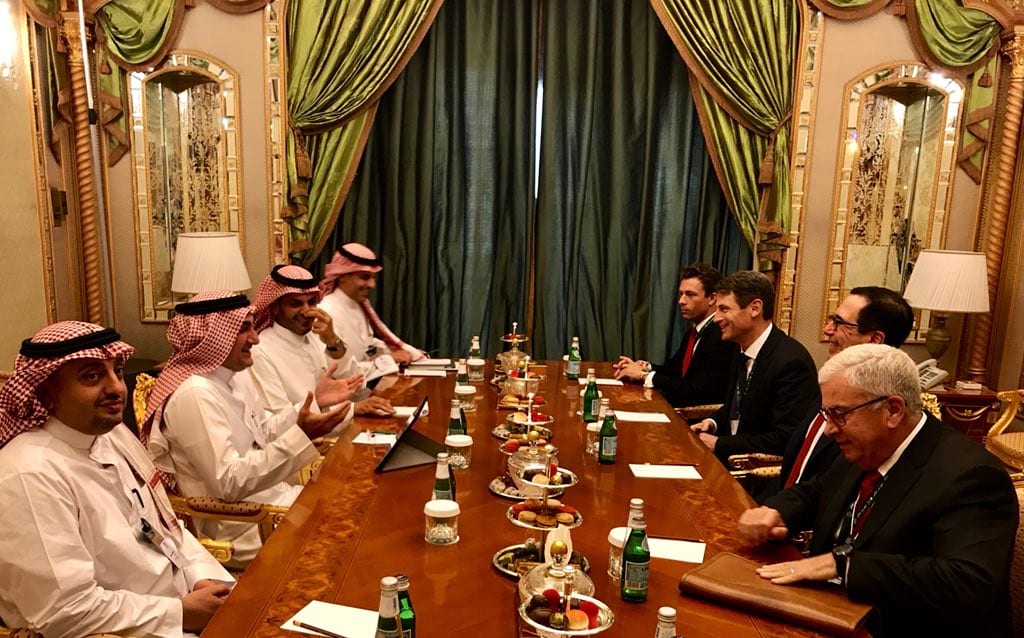
The Electronic Arts acquisition is the most-cited counter-example to the discipline narrative. Fifty-five billion dollars in cash, the largest LBO in history, closed in September 2025, six months after the priorities reshuffle was being prepared. The simple answer is that EA was closed before the 2026-2030 strategy was approved and reflects the prior posture. The more interesting answer is the deal structure. PIF did not buy EA directly. The capital sat alongside Silver Lake, a private-equity partner with a deep gaming-industry track record, and Affinity Partners, the Kushner-family vehicle. The transaction prefigured exactly the partner-funded model that the 2026-2030 strategy then formalised. PIF was the anchor investor, not the sole investor. The deal modelled the discipline before the discipline was announced.
There is a second strategic logic. PIF already controlled Savvy Gaming Group. The EA addition closed the vertical from publisher to platform to engine, with EA Sports FC sitting on top of the Saudi-organised football portfolio (Al-Hilal, Al-Nassr, Al-Ittihad, Al-Ahli plus the marquee Saudi Pro League players acquired in 2023). EA is interactive entertainment IP at a scale that materially affects how PIF’s other holdings monetise. It is the cleanest example in recent memory of a sovereign-wealth fund building a vertical inside an industry rather than collecting trophies across industries.
The 2025 figures also tell a sharper story than the headline. PIF was indeed the most-active sovereign-wealth fund in 2025 by transaction value at $36.2bn. Strip out the EA acquisition and 2025 was a quieter year than 2023 or 2024. The headline conceals the reality of fewer-but-bigger. By June 2026 the pattern has hardened.
What this looks like in a longer arc
The comparison most often drawn for PIF is to ADIA, the Abu Dhabi Investment Authority, a senior, conservative, return-focused sovereign vehicle. The 2017-2024 PIF posture was the opposite of ADIA in almost every dimension. By June 2026 the gap has narrowed, modestly. PIF will not become ADIA, it remains a Vision 2030 instrument, and its mandate to physically transform the Saudi economy is structural, not optional. But the 2026-2030 strategy reads as the maturation arc that Singapore’s Temasek walked through in the early 2000s and that Norway’s NBIM walked through in the late 1990s. Capital discipline arrived, in each case, after a decade of growth-first deployment. In each case the institution that emerged from the discipline event was more capable, not less.
PIF’s discipline event has the additional feature of being unusually visible. The board approved the strategy publicly. The governor went on the record about reshuffled priorities. The NEOM carve-out was named in the documents. The tourism funding cut was reported within weeks. Sovereign-wealth funds, as a class, do not typically broadcast their reallocations. PIF’s choice to broadcast this one is itself the signal, Riyadh is positioning the discipline as the next phase of Vision 2030, not as its failure.
What to watch
Three developments will define the next twelve months. The first is whether Humain’s Riyadh and Dammam data centres launch on the Q2 2026 timetable and whether the “several hundred thousand” follow-on Nvidia GB300 chips actually clear US export controls. The Saudi position on AI is credible only if the compute lands. The second is the 2027 capex cycle, the 2026-2030 strategy commits PIF to a fifteen-percent reduction. The test is whether that holds when a trophy opportunity inevitably presents itself. The third, and the most editorially consequential, is whether the PGA Tour’s refusal of PIF capital becomes a precedent that other US institutions copy. If it does, the Gulf sovereign-capital corridor narrows. If it does not, PIF resumes its acquisition posture in a different category within eighteen months.
For the reader who tracks sovereign-wealth deployment as a category of senior capital, the lesson is structural. The fund that the financial press called the world’s single most consequential buyer through the 2017-2024 decade has, in 2026, become the world’s most disciplined sovereign operator. Both can be true. The transition is the news. The trophy decade is over. The compute decade has begun.
Sources cited
- PIF press release on the 2026-2030 strategy approval. See 2026 PIF 2026-2030 strategy approval.
- Skift, Australasian Leisure Management, and eTurboNews coverage of the NEOM scale-back and Trojena handover. See 2026 NEOM scale-back and 8bn write-down.
- Skift coverage of the April 2026 Saudi tourism funding cut. See 2026-04 Saudi tourism funding scrapped.
- CBS Sports, Sky Sports, Al Jazeera, and Front Office Sports on the end of PIF’s LIV Golf funding. See 2026 LIV Golf funding ends after 2026 season.
- Arab News on the KHC acquisition of seventy percent of Al-Hilal. See 2026-04 KHC acquires 70% of Al-Hilal from PIF.
- Gulf News on the PIF-led $55bn Electronic Arts consortium acquisition. See 2025-09 EA 55bn acquisition.
- PIF and CNBC on the Humain launch as a full-stack sovereign AI vehicle. See 2025-05 Humain sovereign AI vehicle launched.
- Bloomberg and Arab News on the Humain Riyadh and Dammam data-centre programme. See 2026 Humain Riyadh Dammam data centres Q2.
- Arab News on the Saudi National Infrastructure Fund $1.2bn financing framework with Humain. See 2026 Humain 1.2bn infrastructure financing framework.
- Data Center Dynamics on the eighteen-thousand Nvidia GB300 purchase. See 2026 Humain Nvidia GB300 chip order.
- Gulf News and Global SWF rankings on PIF’s 2025 deployment of $36.2bn. See 2025 PIF most active SWF 36.2bn deployed.