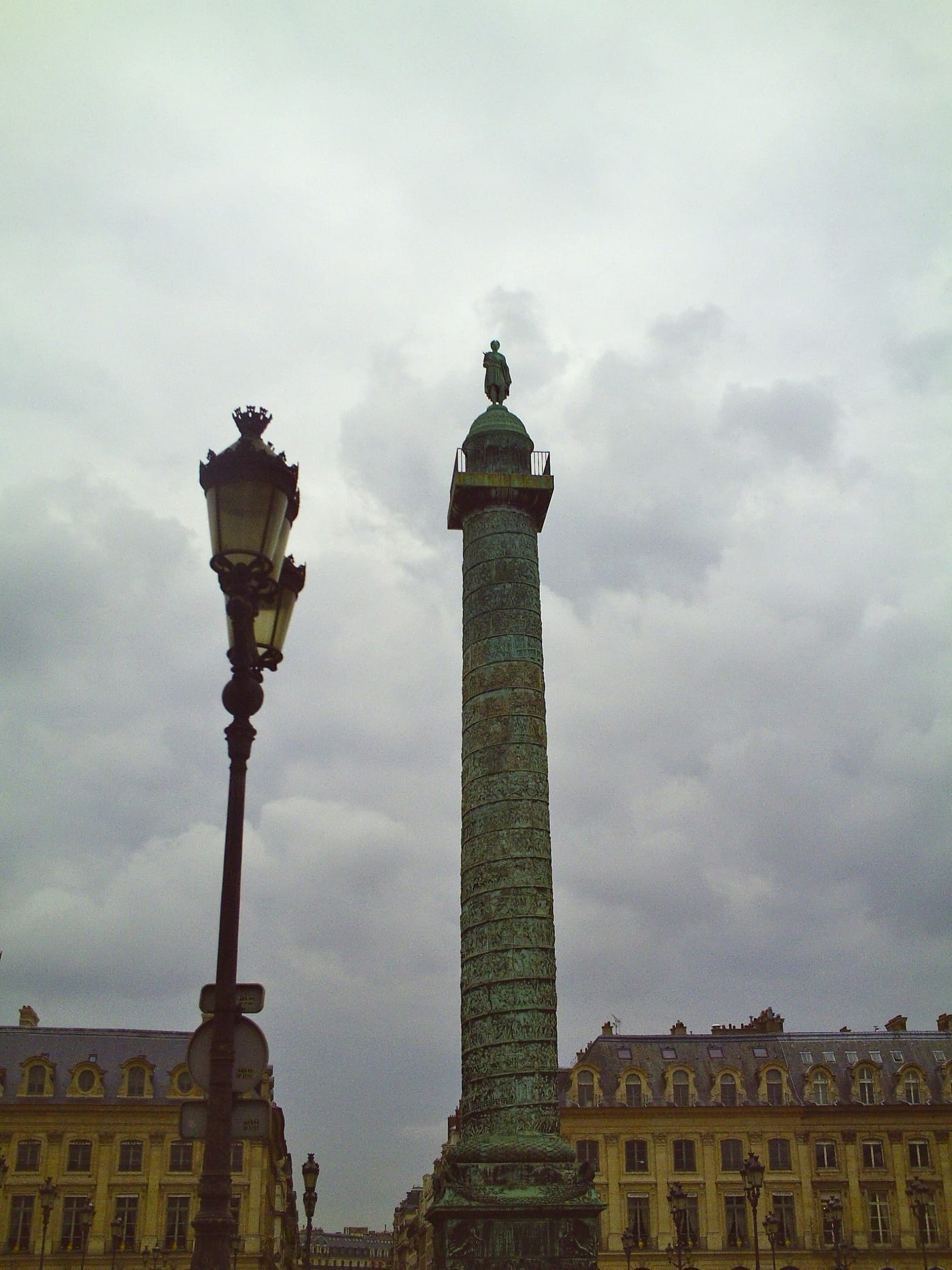
Place Vendôme, Paris. CC-licensed via Wikimedia Commons.
Alain and Gerard Wertheimer, the two brothers who own Chanel
Lede
In May 2025, Chanel released its 2024 financial results. Revenue 16.2 billion euros, down 4.3 percent on 2023. Net profit 3.4 billion euros, down 28.2 percent. The release was unusual for a luxury house of Chanel’s scale only because Chanel is the only luxury house of its scale that is wholly privately owned. The company has no quarterly earnings call, no proxy statement, no public-equity shareholders. Two brothers own it between them. Alain Wertheimer, born 1948, is the chairman and the controlling shareholder. Gerard Wertheimer, born 1951, chairs the watch division. Each holds approximately half of the company. Bloomberg’s billionaires index put Alain’s net worth at 42.4 billion dollars in March 2026; Gerard’s at 41.4 billion dollars. The French financial press estimates the combined professional fortune at approximately 95 billion euros, placing the Wertheimers third or fourth among France’s richest families behind the Hermes family, the Arnault family, and competing for the position with Francoise Bettencourt Meyers.
The leontia Cargill piece documented the cleanest single example of the privately-held American dynasty, twenty-one billionaires from a single agribusiness across five generations. The Wertheimer brothers and Chanel are the European counterpart, structurally distinct: two concentrated heirs, three generations of Chanel leadership, one luxury house. The shared editorial signature is press invisibility relative to wealth scale. This article is about the Wertheimer architecture and the two-heir pattern within the convergent dynastic patterns the leontia register surfaces.
The brothers
Alain Wertheimer is the third-generation Wertheimer to lead Chanel. He took control of the operation in the mid-1970s, after the deaths of his grandfather Pierre Wertheimer (1965) and his father Jacques Wertheimer (1996, by which point Alain had been running the business for two decades). Gerard, the younger brother by three years, assumed the chairmanship of the Chanel watch division. The two brothers operate as co-owners, each holding approximately fifty percent of the company. The legal structure runs through a private French holding entity. There is no public-equity tier. There is no minority outside investor base.
The brothers live outside France. Alain spends substantial time in New York. Gerard maintains his primary residence in Switzerland, where the Bilanz magazine ranks him as the richest individual resident. The Wertheimer family office, Mousse Partners, operates from New York. The family’s tax-residency choices reflect the wider European UHNW pattern that the leontia tax-residency-migration piece mapped: Monaco, Switzerland, and the US function as the canonical departure jurisdictions for senior French wealth.
The public profile of both brothers is, by design, low. Alain has given a small number of formal interviews across his five-decade leadership tenure. Gerard has given fewer. Searches of major financial-press archives for either name produce materially fewer mentions than the comparable searches for the Arnault family, the Dumas (Hermes) family, or the Pinaults (Kering) across the same period. The press-coverage gap is structural. Chanel is fully private; the brothers do not need to communicate with public-equity investors; the operational continuity does not depend on the press relationship.
The 1924 origin
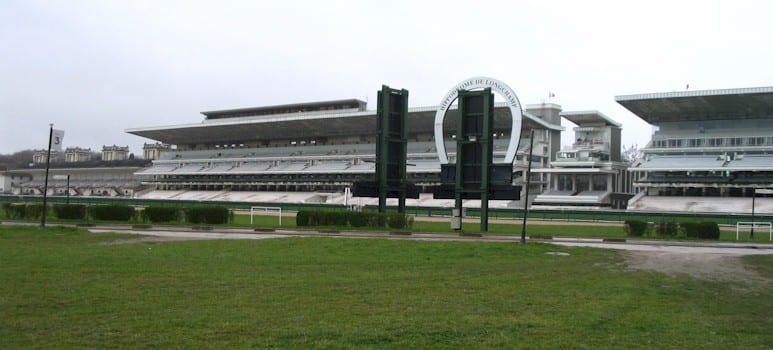
The Wertheimer ownership of Chanel began on a single day at the Longchamp racecourse outside Paris in 1924. Theophile Bader, co-founder of Galeries Lafayette, introduced Pierre Wertheimer to Gabrielle Coco Chanel. Chanel had a production-and-distribution problem. Her fragrance Chanel No. 5, launched in 1921, was selling faster than her atelier could manufacture and ship it. The Wertheimer family already owned Bourjois, the theatrical-make-up and fragrance manufacturer that Pierre’s father Ernest had built into one of France’s largest cosmetics businesses since acquiring the original stake in 1870. Pierre and his brother Paul had internationalised Bourjois with London and New York operations after 1905. The infrastructure was in place.
The deal terms reflected the operational reality. The new fragrance company, Parfums Chanel, was capitalised with the Wertheimers holding seventy percent of the equity, Bader holding twenty percent (as introduction commission), and Coco Chanel holding ten percent. The arrangement scaled the brand globally, generated substantial wealth for all three parties, and produced a legendary commercial dispute that lasted from the 1930s through Chanel’s death in 1971. Chanel periodically attempted to renegotiate her stake; the Wertheimers periodically declined. World War II further complicated ownership when the Wertheimers, as Jewish owners, transferred nominal control to a Christian intermediary to avoid Nazi confiscation, then recovered control after the war. By the time Chanel died in 1971, the Wertheimers had completed consolidation of both the fragrance business and the fashion house under a single private holding structure. Jacques Wertheimer ran the consolidated business until Alain took over.
A century after the Longchamp introduction, the original commercial-incumbent-acquires-creative-founder pattern has resolved into one of the cleanest privately-held luxury dynasties in modern business history. The Wertheimer family contributed manufacturing scale, international distribution, and capital. Coco Chanel contributed the brand and the design vocabulary. Both contributions remain operationally visible inside Chanel today. The branding side is Chanel; the manufacturing-and-distribution side is the Wertheimer business architecture.
Chanel at scale
Chanel in 2024 generated 16.2 billion euros in revenue with a 21 percent operating margin. The 2025 figures, reported in 2026 by the financial press, put revenue at approximately 19.3 billion dollars. The company is the second-largest luxury brand globally behind Hermes (by market-comparable revenue) or LVMH’s combined-brand revenue depending on the methodology. The 2024 decline of 4.3 percent on revenue and 28.2 percent on net profit reflected the broader luxury cycle inflection: the post-2020 spike that produced compound annual revenue growth above 17 percent across 2021 to 2023 corrected meaningfully in 2024 as Chinese consumer demand softened and the global luxury sector entered a normalisation phase.
The structural editorial point is what Chanel did with the 2024 decline. CEO Leena Nair, who took over in 2022 as the first non-French chief executive in Chanel’s history, told the financial press that the company would continue to invest at all-time-high levels through the cycle: continued global retail expansion in Asia and North America, Metiers d’Art atelier investments, the high-jewellery expansion, the new beauty-and-fragrance product lines. CFO Philippe Blondiaux backed the position with the operating-margin discipline that the privately-held architecture permits. The decision to maintain investment levels through a revenue decline is precisely the decision that a comparable public-equity luxury house with activist-shareholder exposure could not have made without intense pressure. The privately-held architecture absorbs the cycle.
In December 2024 the brothers, with Nair, appointed Matthieu Blazy as Artistic Director of Fashion Activities. Blazy, previously creative director at Bottega Veneta (Kering), brings what the press has described as architectural rigour and artisanal depth. The appointment is structurally consequential. Chanel had operated under Virginie Viard from 2019 to 2024 in the post-Karl Lagerfeld era; Blazy is the first artistic director the brothers have appointed who comes from outside the Chanel atelier in modern history. The professionalisation pattern, Leena Nair as CEO plus Matthieu Blazy as Artistic Director, separates the family ownership from the operational creative direction in the standard governance arrangement that mature private-company dynasties adopt at the multi-generational mark. Compare with the Cargill governance arrangement: Brian Sikes appointed CEO January 2023 as the first non-family chief executive in Cargill’s history.
The two-heir architecture
The structural distinction between Wertheimer and Cargill is the heir count. Cargill distributes its sixty-five-billion-dollar combined family fortune across twenty-one named billionaires from twenty-five senior shareholders. Wertheimer concentrates its approximately ninety-five-billion-euro combined fortune across two heirs.
The two-heir pattern produces a different set of operational dynamics. Decision-making is faster: two brothers in agreement run the company in real time. The capital structure is simpler: no internal trust-distribution disputes, no minority-heir negotiations, no generation-skipping trust complexity. The dividend extraction is direct: when Chanel pays distributions, the two brothers receive the entire shareholder share rather than dividing it across a wider family block. The succession problem is more acute: two brothers age out together (Alain is now in his late seventies, Gerard in his mid-seventies), and the next generation must consolidate or fork the ownership in the coming decade.
The Wertheimer next generation is known but less publicly profiled than the Arnault next generation. Alain has multiple children; Gerard has multiple children. Each cohort is now positioned in adjacent business roles within the broader Wertheimer ecosystem. The structural question for the next twenty years is whether the two-heir architecture replicates into a four-or-six-heir architecture across the fourth generation, or whether one branch consolidates the other. The Wertheimer historical record favours continuity. The 1924 founding architecture has survived two world wars, the post-Coco-Chanel succession of 1971, and the post-Pierre-Wertheimer succession of 1965 without an IPO transition.
The family-office layer
Outside Chanel itself, the Wertheimer brothers run an extended family-office architecture through Mousse Partners. The vehicle is named for the original Mousse Properties Limited holding. The principal investment categories under Mousse Partners include public-equity stakes (most visibly a 5.7 percent stake in Olaplex Holdings, the Nasdaq-listed haircare company); adjacent luxury and heritage brand acquisitions made over Alain Wertheimer’s tenure (Eres, the French lingerie and beachwear brand, acquired 1996; Holland and Holland, the London gunmaker, acquired 1989 and sold to Beretta in 2021; Tanner Krolle, the London leather house, acquired 2002); French vineyard holdings; equestrian operations including La Presle Farm, the Thoroughbred racing stable.
The asset-allocation pattern at the Mousse Partners level matches the standard senior single-family-office profile at the fifty-billion-dollar-plus tier: operating businesses plus listed equity plus real estate plus heritage-and-collectibles plus equestrian. The Wertheimer-specific tilt toward equestrian operations is editorially distinctive. La Presle Farm is among the more substantial private Thoroughbred operations in modern French horse racing, a category that overlaps with the broader UHNW equestrian pattern the leontia Field Sports MOC tracks across senior principals from the Maktoums to the Aga Khan.
The Olaplex public-equity position is the smallest documented Wertheimer external holding but the most editorially revealing. Olaplex sits in the haircare adjacency to Chanel beauty. The 5.7 percent stake is consistent with the broader Wertheimer vertical-integration logic: brand positions in personal care, beauty, lingerie, leather, fragrance, all sit inside a coherent luxury-and-beauty thesis that runs through Chanel and outward. The Wertheimer family office is structurally not a diversified-portfolio operation. It is a luxury-and-beauty-vertical operation with adjacent investments.
The European luxury family ranking in 2025
The April 2025 inflection in the European luxury industry recontextualised the Wertheimer position. Hermes International overtook LVMH for the first time in modern luxury-market capitalisation: Hermes at 248.2 billion euros, LVMH at 246.8 billion euros. The Birkin maker became Europe’s most valuable luxury company. The Hermes family (the Dumas-led sixth-generation cluster) overtook the Arnault family as France’s largest fortune. Bernard Arnault’s personal wealth dropped by 73.6 billion euros in 2025 alongside the LVMH share-price correction. The Wertheimer brothers’ combined position now sits in third or fourth in the French family ranking, competing with the Bettencourt Meyers family at L’Oreal for the position depending on the methodology.
The 2025 inflection is editorially central for the Wertheimer story. The publicly-listed family-controlled luxury model (LVMH, Hermes, Kering) entered a structural valuation correction in 2024 to 2025 as the post-2020 boom corrected. The privately-held family-controlled luxury model (Chanel) absorbed the correction without the same market-cap volatility. The Wertheimer brothers’ combined fortune declined modestly in 2025 (Bloomberg recorded Alain dropping approximately 2.92 billion dollars year-on-year) but the magnitude of the decline was materially smaller than the Arnault correction. Private architecture insulated the wealth from the public-market valuation cycle.
For the leontia editorial argument on convergent UHNW patterns: the 2024 to 2025 luxury-cycle inflection is the cleanest single empirical confirmation that privately-held luxury family architecture is a structurally different wealth-preservation mechanism from publicly-listed family architecture. The Wertheimer position is the cleanest single case study of the private-architecture outcome.
What this pattern says about UHNW architecture
The Wertheimer case, paired with the Cargill case, surfaces three operational lessons for UHNW principals considering long-term family architecture choices.
The first is that private architecture insulates from public-market cycles. The Wertheimers ran Chanel through the 2024 to 2025 luxury correction with continued at-all-time-high investment levels. The Cargill family ran the company through the 2024 revenue decline with a record dividend payout. Both decisions are structurally available to privately-held operators in ways that publicly-listed family-controlled operators cannot replicate.
The second is that heir count matters at the multi-generational mark. Cargill’s twenty-one-heir architecture and Wertheimer’s two-heir architecture represent opposite ends of the privately-held distribution spectrum. Both have survived multi-generational tests. The two-heir architecture is faster and simpler at the decision-making level but more vulnerable at the succession-transition level. The twenty-one-heir architecture is slower but more robust at succession transitions.
The third is that operational management separation is the standard governance pattern at the multi-generational mark. Both Chanel and Cargill have professionalised executive leadership while preserving family ownership. Leena Nair (Chanel CEO from 2022) and Brian Sikes (Cargill CEO from January 2023) represent the structural pattern in which family ownership and family management diverge in the third and fourth generations of dynastic continuity. The architecture survives when the operational leadership professionalises.
For the leontia reader who tracks UHNW principals as a category, the Wertheimer story is the cleanest single illustration of how a European privately-held two-heir luxury dynasty preserves wealth across a multi-decade arc that includes two world wars, a creator-founder dispute that ran from 1924 to 1971, a 1965 first-generation succession, a 1996 second-generation succession, a 2022 first-non-French CEO appointment, a 2024 luxury-cycle correction, and a 2025 European luxury-industry inflection that favoured the privately-held model. One hundred years, two brothers, one private holding structure, eighty-four billion dollars per Bloomberg. The press has barely written about it.
Sources cited
- Bloomberg Billionaires Index and Wikipedia on Alain and Gerard Wertheimer. See 2026 Alain Gerard Wertheimer brothers ownership Chanel 42bn each.
- Chanel Limited Financial Results 2024 and WWD on the company’s 2024 to 2025 performance and the Leena Nair / Matthieu Blazy professionalisation. See 2024-2025 Chanel revenue 16.2bn EUR 19.3bn USD 2025 Leena Nair CEO.
- WWD and Old Money Society on the 1924 Pierre Wertheimer to Coco Chanel partnership history. See 1924 Pierre Wertheimer Coco Chanel partnership history.
- CNN, Modaes, and Glamobserver on the April 2025 Hermes overtake of LVMH and the French luxury family ranking. See 2025 luxury family ranking Hermes overtakes LVMH Arnault Wertheimer.
- WWD and family-office disclosures on Mousse Partners and the Wertheimer ancillary holdings (Olaplex, Eres, Holland and Holland, Tanner Krolle, La Presle Farm). See Mousse Partners family office Olaplex Eres Holland Holland Tanner Krolle vineyards.
Sibling article in the cluster
- The richest American family no one talks about, the Cargill / US counterpart in the convergent-patterns pillar.