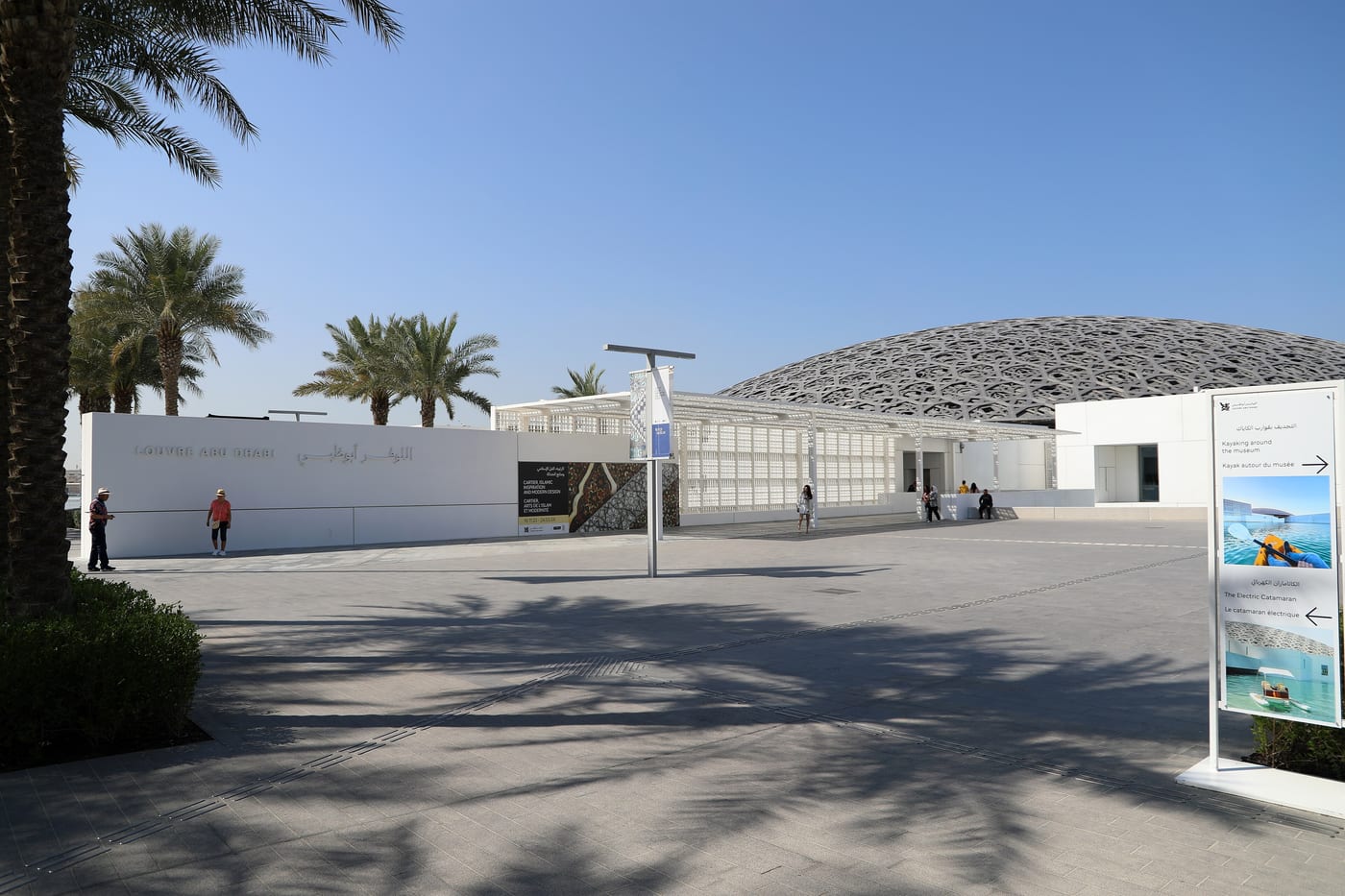
Francesco Bini (Sailko) (14 November 2023). Louvre Abu Dhabi exterior. CC BY-SA 4.0 via Wikimedia Commons.
Abu Dhabi bought a piece of the auction
Lede
In August 2024 the Abu Dhabi sovereign-wealth fund ADQ agreed to invest approximately one billion dollars in Sotheby’s. The deal was a minority stake, structured as newly issued shares, with Patrick Drahi, the Franco-Israeli telecoms billionaire who took the auction house private in 2019, retaining majority ownership and committing additional capital alongside the fund. The transaction was framed at the time as a leverage-reduction exercise and a growth-and-innovation play. The financial press noted the headline number and moved on.
Fifteen months later, on 18 November 2025, Sotheby’s New York sold the Leonard A. Lauder Collection in a white-glove evening of twenty-four lots for five hundred and twenty-seven point five million dollars. The Klimt portrait of Elisabeth Lederer set a new world auction record for the artist at two hundred and thirty-six point four million. The overall Sotheby’s double-header that night totalled seven hundred and six million. Three weeks later the same auction house held its inaugural Abu Dhabi Collectors’ Week, five auctions, one hundred and thirty-three point four million in the room. The Lauder sale and the Abu Dhabi sale were not framed as related events. They were related events. The August 2024 transaction had moved Gulf sovereign capital from buyer profile to ownership stack, and the consequences began arriving in late 2025.
This is a story about who absorbs the supply.
What ADQ actually bought
ADQ is one of three principal Abu Dhabi sovereign vehicles. The Abu Dhabi Investment Authority (ADIA) is the senior and most conservative, modelled on the long-dated international portfolio approach. Mubadala is the strategic and innovation-leaning vehicle, with positions in semiconductors, biotech, and frontier infrastructure. ADQ, founded 2018, is the youngest and most domestic-development-focused. It holds the strategic non-oil consolidation portfolio, utilities, food security, healthcare, transport, and a recent expansion into financial services and entertainment infrastructure. The Sotheby’s stake fits the entertainment-infrastructure line. It was the first major cultural-economy investment ADQ had made at this scale.
The mechanics were specific. The investment was structured as newly issued shares in Sotheby’s, which simultaneously reduced the auction house’s leverage and gave the company fresh capital for the strategic mandate. Drahi committed additional personal capital, preserving his majority position. The Sotheby’s board did not change in any way that the public record showed. The strategic objective, as named in the announcements, was Sotheby’s expansion in the Middle East, a “robust presence” was the working phrase. The deal closed before the end of 2024.
What ADQ did not buy is editorially as important as what it did buy. ADQ did not buy a marquee Klimt or a single trophy lot. It did not buy a museum, a private collection, or a building. It bought partial ownership of the institutional infrastructure through which marquee art changes hands. For the cost of a single quarter-tier of the year’s New York evening sales aggregate, Abu Dhabi acquired a long-term partnership inside the auction-house ecosystem itself.
The dispersal wave was already moving
The 2025 dispersal wave at the marquee tier was not, despite some of the wealth-press framing through 2024, primarily tax-driven. Through 2021 and 2022 Sotheby’s sold the Macklowe Collection across two evening sales for nine hundred and twenty-two million. Christie’s sold the Paul Allen Collection for one point six billion in a single November 2022 night, at the time the largest single-owner art sale in history. Sotheby’s sold the Anne Bass Collection for three hundred and sixty-three million in May 2022, and the Emily Fisher Landau Collection for four hundred and six million in November 2023. None of these dispersals were driven by tax-deadline planning. All were death-driven, divorce-driven, or executor-driven.
The 2024-2025 frame around the TCJA sunset, that the scheduled halving of the federal estate-tax exemption from approximately thirteen point six million to approximately six point eight million per individual would force a wave of pre-deadline dispersals, was a credible reading of the policy mechanics. But the policy mechanics changed. The One Big Beautiful Bill Act, signed into law on 4 July 2025, cancelled the TCJA sunset and set the federal exemption permanently at fifteen million dollars per individual, thirty million per married couple, indexed for inflation from 2027. The deadline that the wealth-planning industry had been working backwards from for six years disappeared with four months of warning.
The Lauder sale executed four and a half months after that deadline disappeared. Leonard Lauder, co-heir to the Estée Lauder cosmetics empire, died in June 2025 at the age of ninety-two. His estate moved on the standard Sotheby’s calendar for the November marquee week. The structural driver was that the owner had died, the executors had a duty to convert, and the November New York auction calendar was the venue. Tax timing was a secondary input. State-level estate tax, New York’s exemption sits at approximately seven point one six million for 2025, well below any Lauder-tier collection valuation, and the New York tax has a cliff rate that taxes the entire estate once the threshold is exceeded, would have been a structural consideration regardless of the federal position. The wave was always running on biology.
What the deal looked like in practice
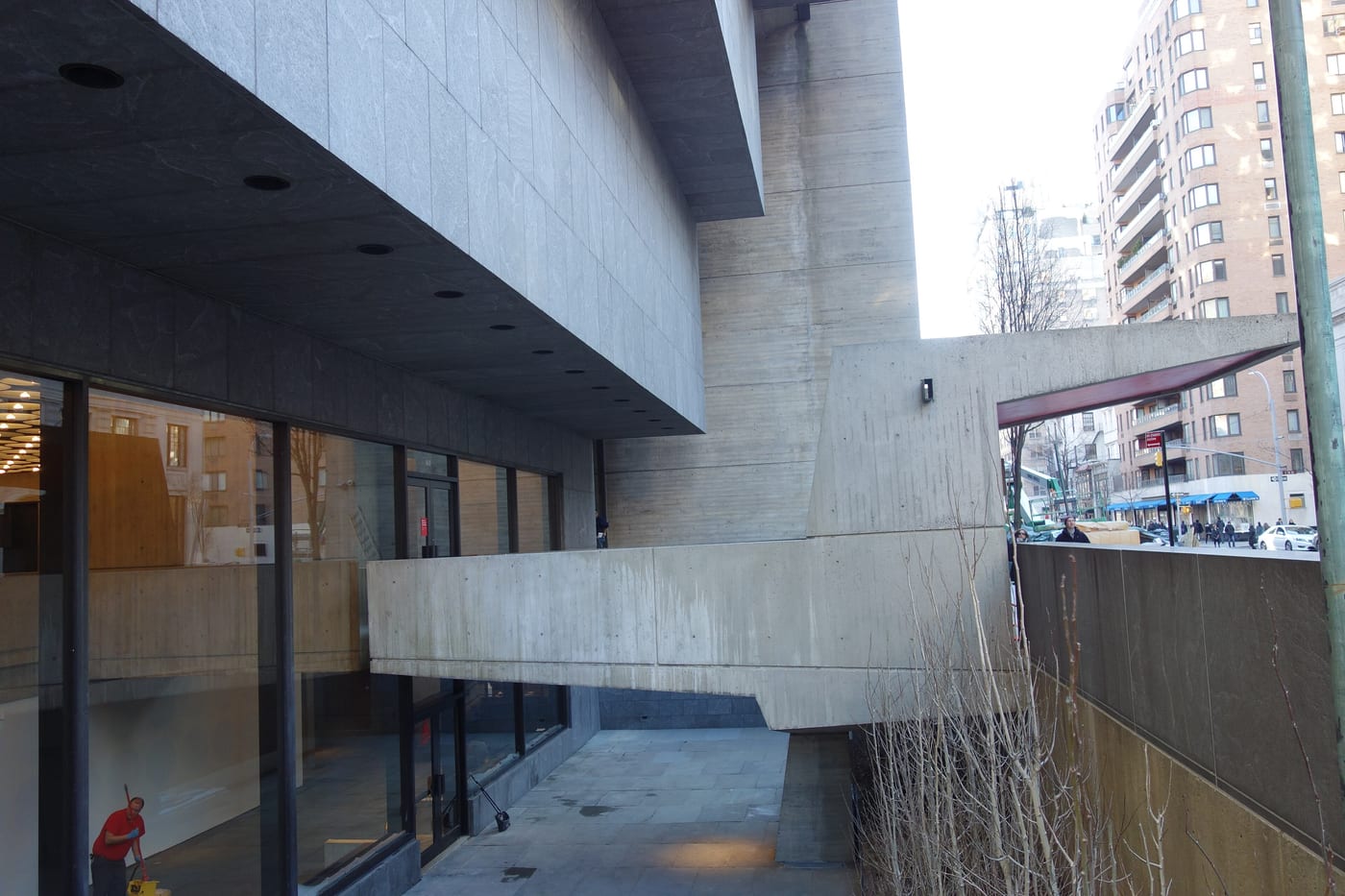
The November 2025 Sotheby’s double-header night totalled seven hundred and six million dollars across three hours of evening sale at the Breuer Building in New York. The Lauder Collection alone contributed five hundred and twenty-seven point five million. All twenty-four Lauder lots sold, the auction trade calls this a white-glove sale, and they are uncommon at this scale. The pre-sale estimate range was four hundred to four hundred and eighty-two and a half million. The realised total beat the high estimate by forty-five million, or just under ten percent.
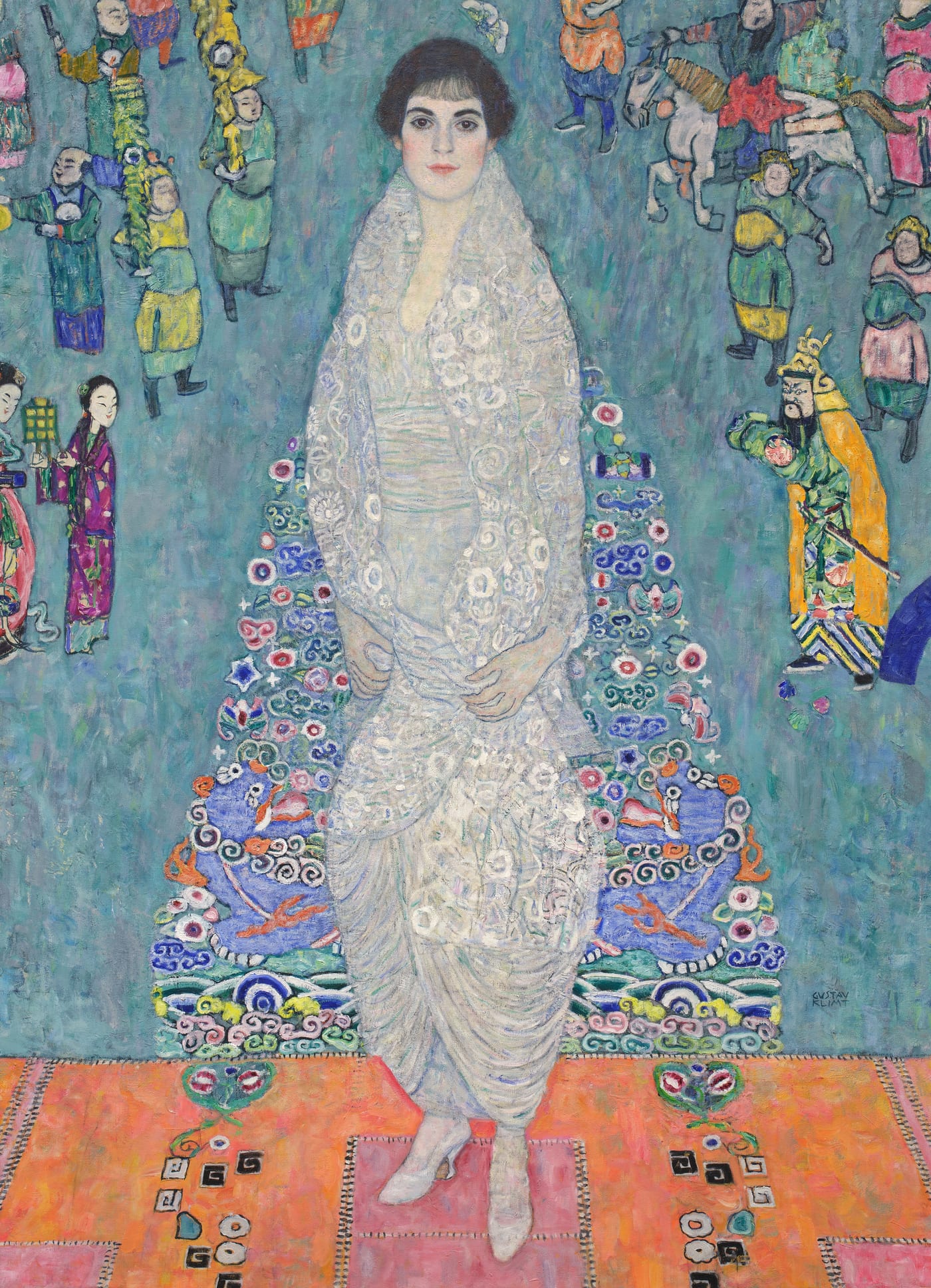
The Klimt was the lot that defined the night. Portrait of Elisabeth Lederer, painted in 1914 in oil on canvas, sold for two hundred and thirty-six point four million on a pre-sale estimate of one hundred and fifty. The sitter was a member of the prominent Lederer Jewish-Austrian family of Vienna; the painting passed through Holocaust-era restitution discussion before Leonard Lauder’s ownership. The three Klimt paintings from the Lauder collection together totalled approximately four hundred million dollars on the night. The Klimt result was reported by several sources as the highest auction price ever paid for a work of Modern art.
Three weeks later, on the first weekend of December 2025, Sotheby’s held its inaugural Abu Dhabi Collectors’ Week. Five separate auctions. One hundred and thirty-three point four million in the room. The event was the first major operational expansion under the new ownership structure. The August 2024 ADQ stake had been the precondition; the Collectors’ Week was the consequence. For the analyst tracking the deal sequence, the cause-and-effect line is direct.
The depth of the receiving market
The combined 2025 totals at Christie’s, Sotheby’s and Phillips reached four point five five billion dollars, up eleven point one percent on 2024 and the first growth year at the three-house aggregate since 2022. The driver, as the houses themselves told the trade press in their year-end communications, was single-owner collections at the senior tier. Lauder, Ross Weis (the Christie’s evening that featured Mark Rothko’s No. 31 Yellow Stripe at sixty-two million pounds), Edlis-Neeson estate components, and additional named consignors carried the volume.
The wider Art Basel and UBS Global Art Market Report, published March 2026 and covering all of 2025, put global art sales at fifty-nine point six billion dollars, up four percent from 2024. Dealer sales up two percent; public auction sales up nine percent by value. The headline data point in the report was the HNW collector wealth-allocation shift: the share of high-net-worth wealth allocated to art, on a portfolio-weighted basis, moved from fifteen percent in 2024 to twenty percent in 2025. A five-percentage-point shift in HNW art allocation, on a multi-trillion-dollar HNW asset base, is the largest demand-side capital-allocation move the report has tracked at this resolution.
The structural reading is that the receiving market was, going into the 2025 dispersal cycle, materially deeper than the 2022-2024 trade press had assumed. The fear in 2023 was that sequencing problems would compress mid-tier estimate ranges as a Macklowe-scale collection arrived every six months. The 2025 evidence falsifies that fear. The Lauder Collection beat the high estimate; the Klimt set a record; the three-house aggregate posted growth. The supply that the trade press had been worrying about turned out to be smaller than the demand that had quietly built up underneath it.
Why Abu Dhabi specifically
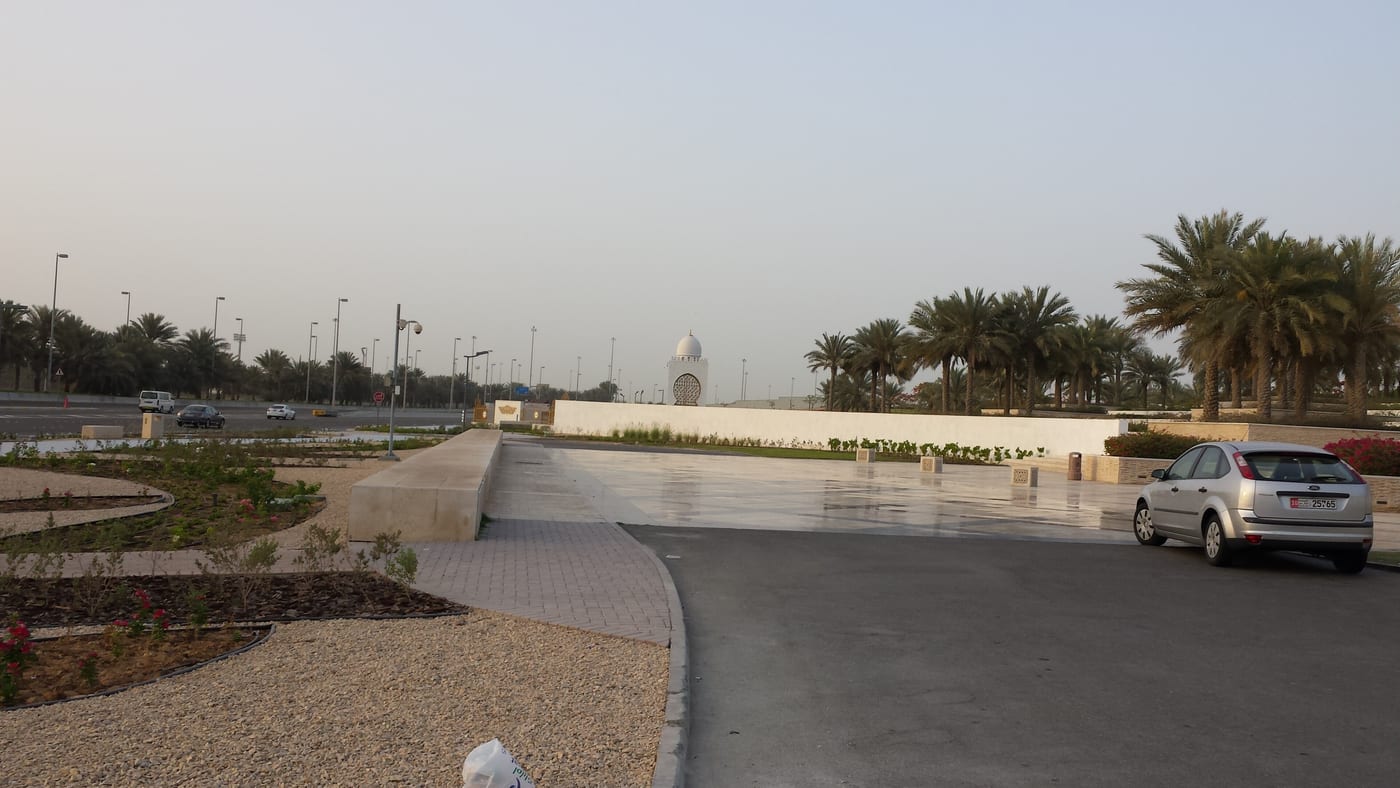
The Gulf Cooperation Council region, the UAE, Saudi Arabia, Qatar, and the smaller member states, has been the brightest performer in the art market’s geographic mix during 2024-2026. The Art Basel + UBS data identifies expected growth of four to six percent across the GCC through 2026, well above the global four-percent baseline. Each of the three Gulf states with material cultural-infrastructure programmes has been building on a long-arc schedule: the Louvre Abu Dhabi opened 2017; the Guggenheim Abu Dhabi is under multi-year construction in the Saadiyat Cultural District; Qatar’s Mathaf Arab Museum of Modern Art and its broader Doha museum cluster (under Sheikha Al-Mayassa bint Hamad Al-Thani’s patronage) operate at scale; Saudi Arabia’s Diriyah cultural development and the Riyadh Art programme are recent additions.
What the August 2024 ADQ deal did was give Abu Dhabi a direct stake in the institutional flow itself. The Louvre Abu Dhabi receives consigned lots and donated material; the Sotheby’s stake gives ADQ access to the consignment relationships at the moment dispersal-wave estates are deciding which house to consign to. The two are different categories of cultural-infrastructure investment. ADQ now operates in both.
The Abu Dhabi sovereign-capital strategy is also taxonomic. ADIA holds the long-dated international portfolio; Mubadala holds the strategic-technology positions; ADQ holds the domestic-economic-consolidation portfolio. The cultural-economy mandate sits in ADQ specifically. For sister Gulf vehicles, Saudi Arabia’s Public Investment Fund, separately covered in the leontia analysis of the 2026 PIF discipline event, or Qatar’s QIA, the auction-house ownership structure is now a precedent that will be visible the next time a marquee cultural-infrastructure asset is up for capital partnership. The Sotheby’s deal is the template, not the endpoint.
What this means for the dispersal cycle
The forward calendar for 2026 carries the wave straight through into the next cycle. Sotheby’s has scheduled the Robert Mnuchin: Collector at Heart evening auction as a standalone single-owner sale in the spring marquee week, Modern and Contemporary masterworks, led by pivotal Abstract Expressionist material, from the New York dealer whose Mnuchin Gallery had been one of the senior commercial venues for that material for decades. The estate-dispersal pattern that ran through 2021-2025 has another marquee event queued for May.
For the collector estate or family-office trustee weighing how to dispose of a major collection in 2026 or 2027, the structural reading of the ADQ-Sotheby’s deal is straightforward. The receiving capital base has expanded; the receiving infrastructure has acquired sovereign-capital partners; the Gulf is now operationally close to the New York and London evening-sale calendar in a way it was not eighteen months ago. The execution-risk argument for using the major-house auction route rather than a private-treaty broker has improved. Lauder beat estimate by forty-five million. Mnuchin will be a tell on whether the depth holds.
For the reader who tracks cultural-economy capital flow as a category, the lesson is structural. The receiving market is no longer a passive set of buyers showing up to evening sales. It is a partial owner of the venue. The 2017-2024 frame in which Gulf cultural buying was a buyer profile is over. The 2024-2026 transition is that Gulf cultural capital is now in the ownership stack.
What to watch
Three developments will define the next twelve months. The first is the May 2026 Mnuchin sale. If it lands at or above pre-sale estimate, the structural depth-of-receiving-market reading holds and the dispersal cycle continues into 2027 on the same terms. If it underperforms, the late-2025 results retroactively become the peak-cycle marker.
The second is whether another Gulf sovereign vehicle takes a stake in another auction or major dealer infrastructure. Saudi Arabia’s PIF, separately moving into a discipline phase per its 2026-2030 strategy, is unlikely to make a marquee art-infrastructure investment in the next twelve months. Qatar’s QIA and Saudi’s Cultural Development Fund are the more plausible next-mover candidates. The Christie’s ownership structure (Pinault family private holding) is the obvious competitive parallel; whether Pinault opens to a similar minority arrangement is the structural counter-question.
The third is whether the Lauder-Klimt record itself becomes the new ceiling or whether 2026 produces a higher individual lot. The Klimt at two hundred and thirty-six point four million is the highest auction price for a Modern work; the higher Surrealist-and-after tier of any forthcoming sale is the place to watch. The Mnuchin Abstract Expressionist material is unlikely to clear the Klimt level on a single lot; the test will be whether a Picasso, a de Kooning, or another senior-Modern work moves through a 2026 sale at a higher single price.
For the reader who follows where the wealth-pressed-into-art capital actually sits in 2026, the position is clearer than it was in 2024. The receiving market is deeper, the receiving ownership stack is part-Gulf, and the dispersal wave the press kept calling tax-driven turned out to be neither tax-driven nor short-lived. The forcing function was always generational handover. The receiving market just bought itself a partner.
Sources cited
- Sotheby’s, ADQ, Artlyst, The Art Newspaper and AGBI on the August 2024 ADQ minority-stake deal in Sotheby’s. See 2024-08 ADQ Abu Dhabi 1bn minority stake Sotheby Drahi.
- Sotheby’s press release, Artnet, ARTnews and The Art Newspaper on the Leonard A. Lauder Collection white-glove sale. See 2025-11-18 Lauder Collection 527m Sotheby white glove sale.
- Artnet, ARTnews and The Art Newspaper on the Klimt Portrait of Elisabeth Lederer record. See 2025-11 Klimt Elisabeth Lederer 236m record Lauder collection.
- ARTnews, Antiques Trade Gazette and The Art Newspaper on the November 2025 Christie’s marquee evenings (Ross Weis Collection, Edlis-Neeson lots, 21st Century Evening Sale). See 2025-11 Christie 21st century evening Ross Weis Rothko 62m.
- Antiques Trade Gazette, Artnet and The Art Newspaper on the combined 2025 three-house total of $4.55bn / +11.1% YoY. See 2025 Christie Sotheby Phillips 4.55bn total first growth year since 2022.
- Art Basel and Malay Mail on the Art Basel + UBS Global Art Market Report 2026, global art sales $59.6bn / HNW collector art allocation 20%. See 2025 Art Basel UBS global market 59.6bn HNW allocation 20pc.
- Art Basel and ARTnews on the inaugural Sotheby’s Abu Dhabi Collectors’ Week (December 2025, $133.4m across five auctions). See 2025-12 Sotheby Abu Dhabi inaugural Collectors Week 133.4m.
- Puck, New York Loan and Luster Magazine on the spring 2026 Robert Mnuchin: Collector at Heart Sotheby’s single-owner auction. See 2026-spring Robert Mnuchin Collector at Heart single owner Sotheby.
- Morgan Lewis, Davis+Gilbert and Country Tax Calc on the OBBBA cancellation of the TCJA sunset and the $15m permanent federal exemption. See 2025-07 OBBBA TCJA sunset cancelled 15m permanent exemption.
- Citizens Bank and Mercer Advisors on the state-level estate taxes still in force below the federal exemption (NY, MA, OR, WA, CT). See 2026 state estate taxes NY MA WA OR CT still apply below federal exemption.
- The Art Newspaper, Christie’s and Sotheby’s historical post-sale reports on the Macklowe / Allen / Newhouse / Bass / Fisher Landau / Rosa de la Cruz dispersal precedent. See Macklowe Allen Newhouse dispersal precedent 2021-2024.